

With their tall towers, thick walls and wide moats, castles have dominated the landscape of Europe since mediaeval times. Whether built for protection or as an ostentatious display of wealth, there are many spectacular castles with fascinating histories and unique features to discover across the continent. Here, we’ve picked 10 of our favourites.
Peles Castle, Romania
An extravagant palace built by King Carol I to serve as his summer residence, Peleș Castle is among the most impressive in Europe. Built between 1873 and 1883 and redesigned in 1914, the castle stands in a vast forested park tucked away among the low hills of the Carpathian countryside. With its sharp Gothic profile and decorative woodwork, it recalls the castles of fairy tales.
Bojnice Castle, Slovakia
Rising high above the town, the romantic Bojnice Castle is one of Slovakia’s greatest attractions. It was originally built in the 12th century and has since undergone much change. Its last owner, Count Ján František Pálffy, remodelled it into the stately residence resembling the Gothic castles of France’s Loire valley that we see today.
Malbork Castle, Poland
Strategically positioned by the River Nogat, this formidable fortress was built by the Teutonic Knights starting in the 13th century. A true masterpiece of mediaeval architecture, Malbork is one of the largest castles in the world. Because of a lack of stone in the plains of northern Europe, it was built from brick and its impressive orange walls contrast beautifully with the surrounding greenery.
Neuschwanstein Castle, Germany
Dreamy Neuschwanstein Castle sits on a steep hill in south Germany at the foothills of the Alps. With its tall towers and ornate spires, the castle looks like the setting of a fairy tale. It features around 100 rooms, an indoor garden, a walled courtyard and even an artificial cave. It was built as a luxurious retreat for King Ludwig II of Bavaria, who also commissioned the other lavish palaces of Linderhof and Herrenchiemsee.
Château de Chambord, France
Henry James once said “Chambord is truly royal – royal in its great scales, its grand air, and its indifference to common considerations.” One glimpse of the fairy-tale turrets and elegant gardens of this magnificent château proves him right. The Loire’s largest residence was the brainchild of extravagant François I and the design was probably initiated by Leonardo da Vinci. At one point during its construction, François I suggested diverting the Loire river to flow in front of the château, but he settled for redirecting the nearby Cosson instead.
Windsor Castle, England
Used for state visits and as a weekend retreat by the Queen, Windsor Castle is the oldest and largest continuously occupied castle in the world. Established by William the Conqueror in the 11th century, Windsor Castle has since been altered by successive monarchs, rendering it a remarkable monument to royalty’s changing tastes. The castle is surrounded by Windsor Great Park – 2,000 hectares (5,000 acres) of parkland, including a deer park and some ancient oaks as old as the castle itself.
Culzean Castle, Scotland
Standing on a cliff’s edge in an extensive parkland estate, the late-16th-century keep of Culzean (pronounced Cullayn) is a masterpiece in a land full of magnificent castles, with a glorious estate to match. Architect Robert Adam’s masterful design and exquisite taste reached their apotheosis in this castle, which was a crumbling fortified tower house before he worked his magic. No expense was spared in the decoration and craftsmanship of this cliff top fortress, which commands a dramatic coastal position looking out to sea.
Palácio Nacional Da Pena, Portugal
On the highest peaks of the Serra de Sintra stands the spectacular palace of Pena. Built in the 19th century for Queen Maria II’s flamboyantly creative husband, Ferdinand of Saxe-Coburg and Goth, it comprises an eclectic medley of architectural styles. With the declaration of the Republic in 1910, the palace became a museum, preserved just as it was when the royal family lived here.
Alcázar de Segovia, Spain
Segovia’s royal castle rises above the town from its perch in the hills, piercing the sky with its gabled roofs, turrets and crenellations. The layout of the castle is determined by the contours of the rocky outcrop on which it stands. Although first records date from the 12th century, it was mostly built between 1410 and 1455, and had to be largely rebuilt following a fire in 1862. Inside, it contains a weaponry and a series of elaborately decorated rooms.
Castello Sforzesco, Italy
The Sforza dukes of Milan ruled over one of the most cultured Renaissance courts in Europe from this complex of fortresses, castles and towers. This 15th century citadel is surrounded by the Parco Sempione, the old ducal hunting reserve. Today, the Sforzesco castle houses the Civic Museums, with a vast collection of art and decorative arts.
Read next
Which Greek island should you visit?

From the breathtaking beaches to the pretty ports, the Greek Islands are irresistible. Whichever island you choose to visit you're guaranteed to experience great food, hospitable locals and the alluring Greek sea. But with hundreds of diverse islands to choose from, how do you decide?
How to spend 5 days in Andalucía
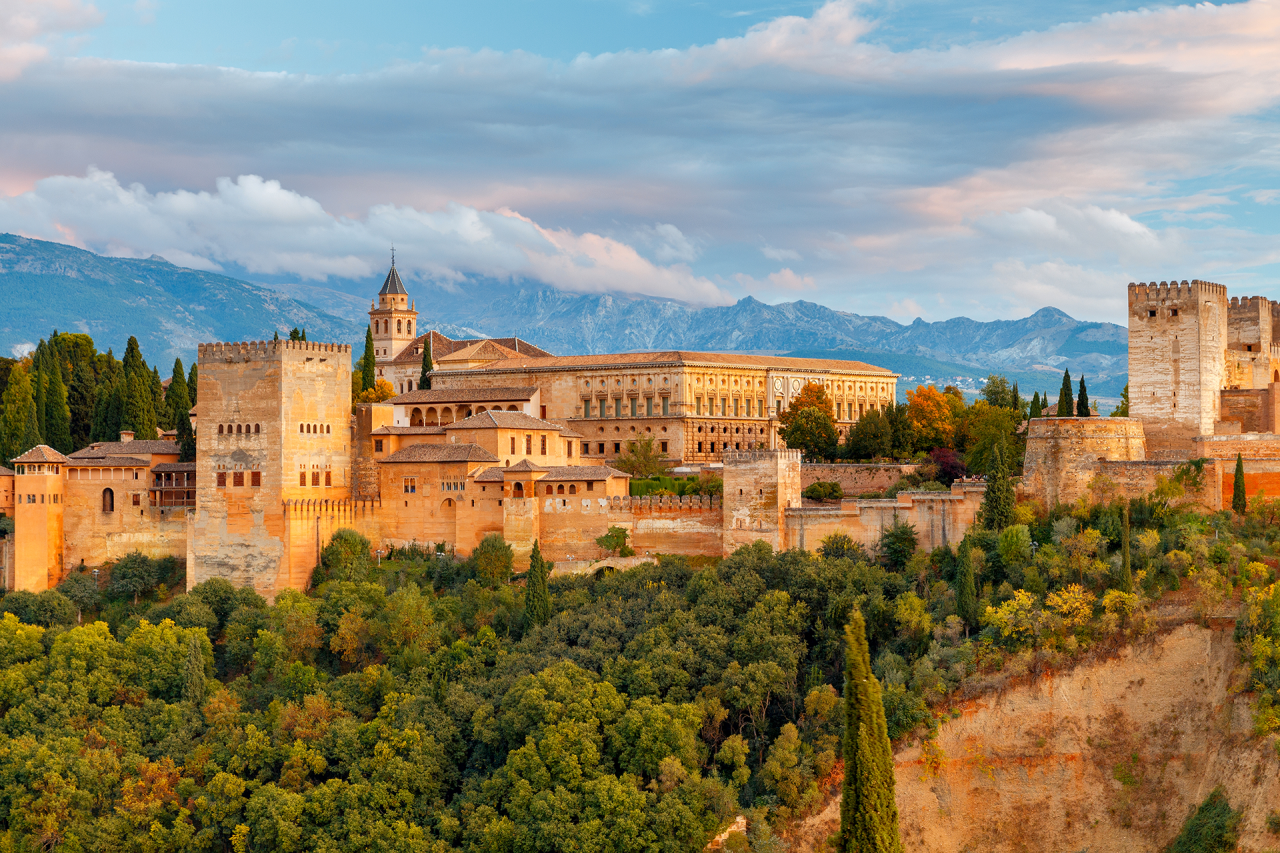
Packed with show-stopping Moorish monuments, atmospheric Old Towns and orange-scented plazas, Andalucía is a region of endless romance and vibrant culture. With so much to see and do, where do you start? We’ve got a detailed 5 day itinerary to help you plan the perfect visit.