

London has been the royal capital of the UK for almost a thousand years. Over the centuries, successive monarchs have done much to shape the character of the city, from the gardens they landscaped to the landmarks they left behind. Here’s some of our favourites…
DK London
View BookBuckingham Palace
One of London’s most recognized landmarks, Buckingham Palace is the official residence of the British monarch. The palace is used for ceremonial occasions for visiting heads of state as well as the weekly meeting between the King and the Prime Minister. John Nash converted the original Buckingham House into a palace for George IV (reigned 1820-30). Both he and his brother, William IV (reigned 1830-37), died before work was completed, and Queen Victoria was the first monarch to live at the palace.
Tower of London
At times a royal palace, at others a prison and place of execution for fallen monarchs or rejected courtiers, the story of the Tower of London is to some extent the story of the English monarchy itself. Built by William the Conqueror in the late 11th century, this was where Anne Boleyn awaited her fate after falling out of Henry VIII’s favour and was later beheaded. Curiously, for 600 years it was also home to the royal menagerie, a collection of exotic wild animals, including lions and an elephant, gifted to the monarchy. It is now one of London’s most popular attractions.
Hampton Court Palace
The finest piece of Tudor architecture in Britain, Hampton Court was given to Henry VIII by the king’s ally Cardinal Wolsey. It was enlarged by Henry and then later rebuilt by William and Mary, with the help of architect Christopher Wren. Its many rooms include a huge kitchen, the Cumberland Art Gallery, the Chapel Royal and royal apartments. The stunning gardens, with their famous maze, are as much an attraction as the palace.
Kensington Palace and Gardens
An intimate royal palace in Kensington Gardens, famous as the home of Princess Diana, its first sovereign residents were William and Mary in 1689, and Queen Victoria was born here in 1819. The interior has displays of regal fashion and focuses on the lives of past residents including William and Mary, Victoria and Diana. The Kensington Place Pavillion is a delightful spot for tea.
A walk in the gardens reveals the grandiose Albert Memorial. Designed by leading Victorian architect George Gilbert Scott and unveiled in 1876, it is made up of a vast decorative Gothic canopy which sits a gilded statue of Prince Albert, the beloved consort of Queen Victoria.
A walk in the gardens reveals the grandiose Albert Memorial. Designed by leading Victorian architect George Gilbert Scott and unveiled in 1876, it is made up of a vast decorative Gothic canopy which sits a gilded statue of Prince Albert, the beloved consort of Queen Victoria.
The Queen's House
This delightful home in the middle of Greenwich Park was the first Palladian building by Inigo Jones, completed in 1637 for Henriette Maria, Charles I’s queen consort. Restored to its 17th-century glory, it houses the National Maritime Museum’s art collection. Highlights include the perfectly cubic Great Hall and the spiral “tulip staircase,” as well as paintings by Gainsborough, Stubbs and Hogarth.
Kew Palace and Queen Charlotte’s cottage
The smallest royal palace is located in Kew Gardens. Kew Palace was built in 1631 and was a residence of George III, whose mother, Princess Augusta, first created the gardens in 1759. Also on the grounds is the rustic Queen Charlotte’s cottage, used by the royal family for rest and refreshment while out walking in the gardens.
Read next
The 10 best Royal Parks and gardens in London
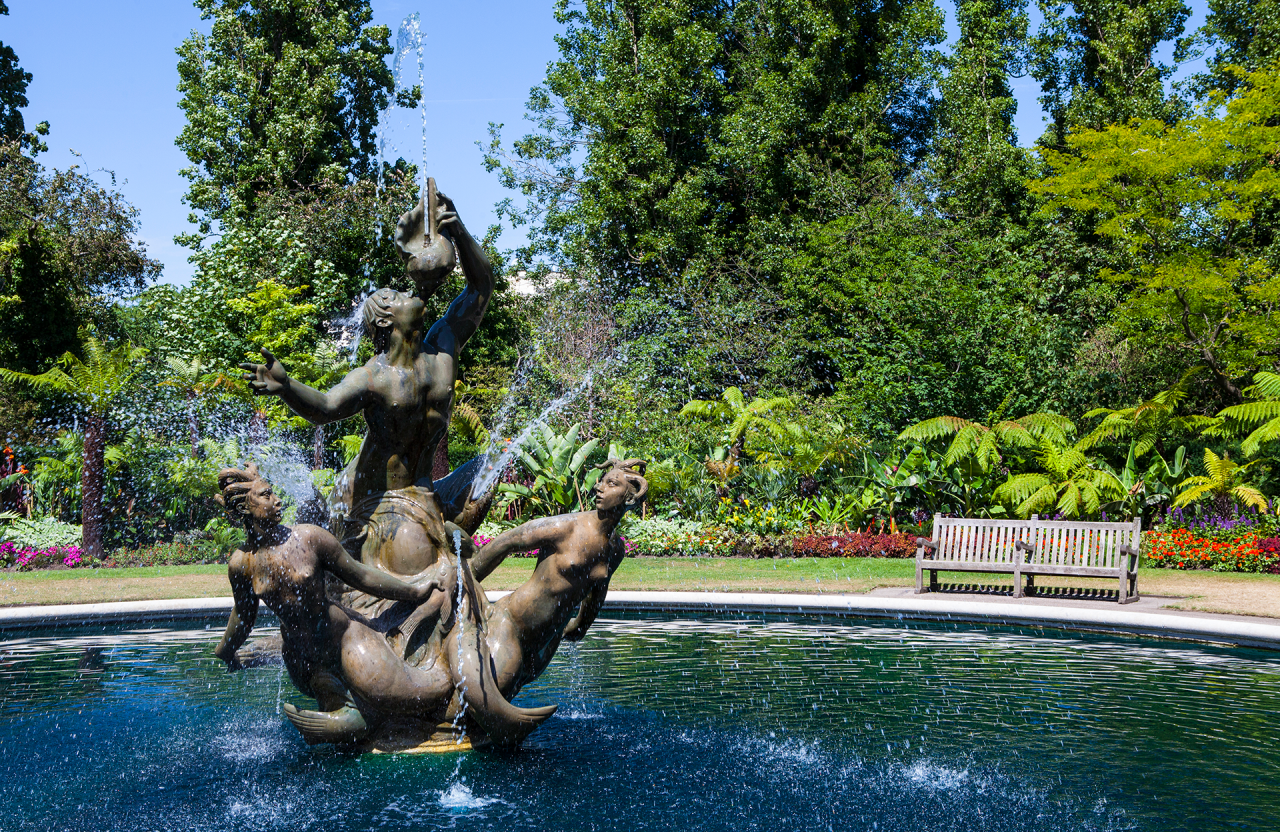
Step back from the hustle and bustle and into London's leafy havens...